
Real Estate & Lease
Move-Out Checklist and Deadlines
Reviewed 2026-08

In short
- Moving out of a Korean lease is an order of operations: notice on time, money settled, deposit secured — then keys and registration move.
- Your non-renewal notice is due no later than 2 months before expiry, in provable form.
- Apartment dwellers: reclaim the long-term repair reserve (장기수선충당금)you paid inside the management fees — it was the owner’s bill, and it is refundable at move-out.
- On the day: deposit in your account before keys out of your hand, with photos, meter readings, and nothing broad signed in a hurry.
- After the move, foreign residents report the new address within 15 days — and if the deposit is unpaid, the registration order comes before any address change.
Moving out of a Korean lease is where several separate systems — notice rules, deposit protections, building management, immigration paperwork — all demand attention in the same two weeks. Each is simple alone; missed together they cost real money, and one of them (moving your registration too early) can cost the deposit itself.
This guide is the checklist, in time order, with the deadlines attached. The deep dives live elsewhere: the deposit-recovery machine in Getting Your Housing Deposit Back and the move-with-protection procedure in Lease Registration Order.
1. The order of operations
T minus 2 months (or more): notice
Tell the landlord, provably, that you are leaving — or the lease renews itself on the same terms.Final weeks: settle the money map
Repair reserve, management fees, utilities, internet — what you are owed and what you owe, itemized before the last day.The day: simultaneous exchange
Deposit confirmed in your account against keys and possession — photographed, metered, and documented.After: registrations and reports
New address registered — 15 days for the foreigner sojourn report — and any unresolved deposit claim already secured before you left.
The one unbreakable rule
2. Two months out: end the lease properly
The lease only owes you the deposit when it actually ends — and Korean leases renew silently. Your non-renewal notice must reach the landlord no later than 2 months before expiry; on a lease that already renewed implicitly, your termination takes effect 3 months after notice arrives(Housing Lease Protection Act arts. 6, 6-2). Send it provably — certified mail, or a message thread with the landlord’s reply — and calendar the date it was received.
This is also the moment to read the landlord’s financial weather. Slow replies, “after the next tenant” talk, a register newly heavy with loans — any of these means starting the registration-order paperwork early, while your move-out date is still flexible.
The same clock runs against the landlord: their non-renewal notice is due between 6 and 2 months before expiry, and silence on both sides renews the lease automatically on the old terms. If you receive a landlord’s notice, date-stamp it the way you would your own — whether it arrived inside the window decides whether it counts at all.
Notice is also a fork in the road, not just a formality: if you would rather stay, the same window — 6 to 2 months before expiry — is when your once-per-lease renewal demand must be made, with its 5% cap on increases. Decide deliberately which letter you are sending, because the two are opposites and both expire on the same day. The renewal mechanics live in Jeonse, Explained.
3. Final weeks: money owed both ways
- Reclaim the repair reserve. In managed apartment complexes, the long-term repair reserve (장기수선충당금) is legally the owner’s burden (Multi-Family Housing Management Act art. 30), but tenants pay it inside the monthly management fee. At lease end you can claim it back from the owner (Enforcement Decree art. 31(8)) — the management office prints the paid total on request, and over a few years it is commonly hundreds of thousands of won.
- Settle the management fees — final-month proration, and a statement from the office confirming nothing outstanding; landlords deduct claimed arrears from deposits, so close this in writing.
- Close out utilities — electricity and water settle by meter reading; city gas needs a booked disconnection visit, so call days ahead, not on the morning of the move.
- Internet and TV — contract terms decide the early-termination fee; moving the contract to the new address often beats cancelling. Handle it before the equipment is buried in a box.
4. Move-out day
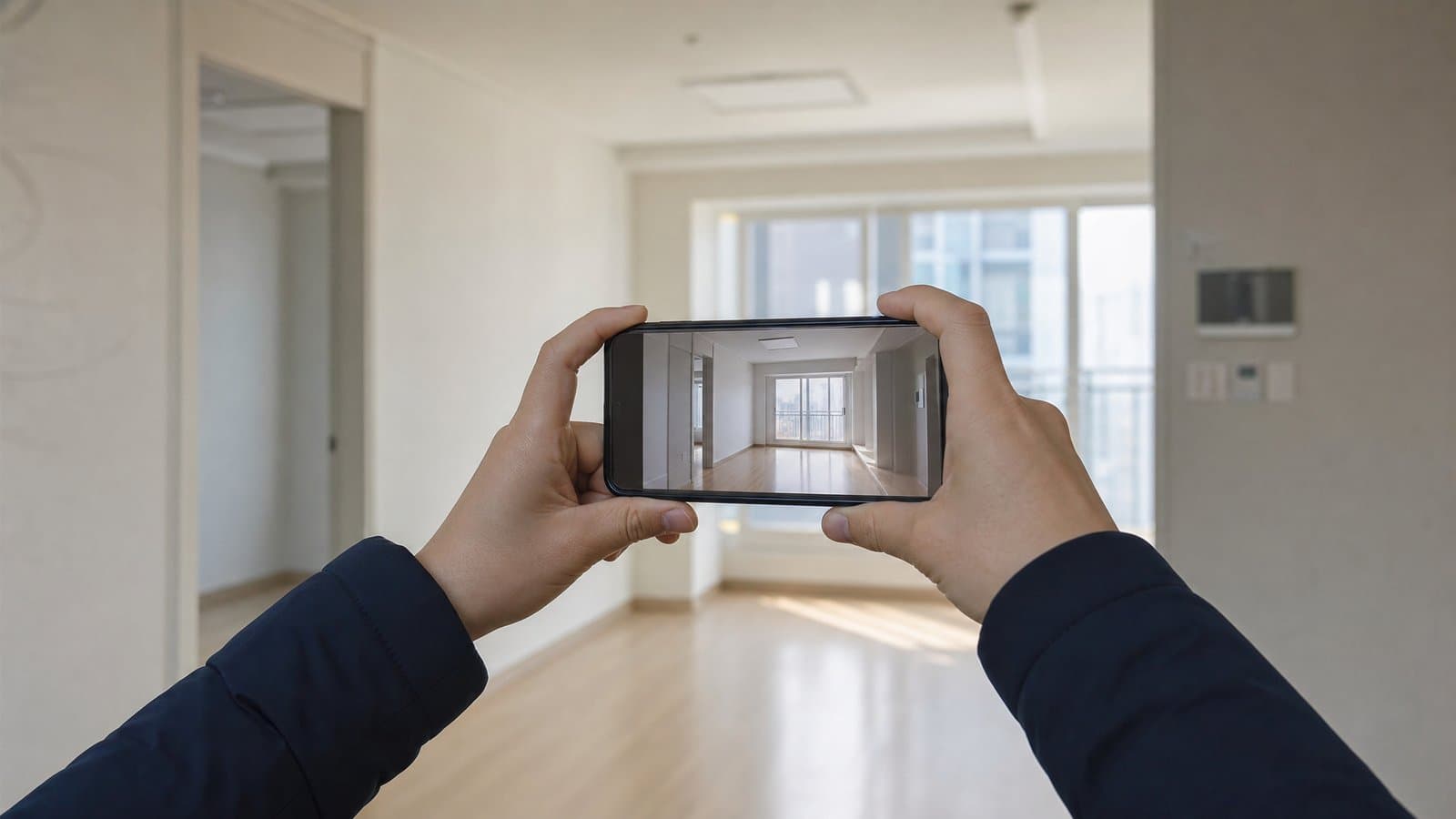
Ten minutes of photographs — every room, every meter, the keys changing hands — is the cheapest legal protection on this page.
- Simultaneous exchange. The deposit and the unit are owed at the same time: confirm the transfer has landedin your account before the keys leave your hand. “This afternoon, promise” is not a transfer.
- Walk through together.Photograph every room, record the meters, and agree on the condition in the landlord’s presence — the same photos that answer a damage claim also prove the state you left.
- Restoration means damage, not use. You return the unit in its state allowing for ordinary wear — practice does not make tenants repaint every sun-faded wall. Genuine damage is a settlement item; resolve it as a number in writing, not a vague deduction later.
- Read before signing anything.A “final settlement” paper can waive more than it says out loud. If the deposit is short by even one claimed deduction you dispute, sign nothing that reads like closure.
The small hardware matters too: access cards for the lobby and parking, remote controls, mailbox keys, and the resident parking sticker all belong in the handover, counted and noted on the settlement paper. Unreturned cards are a classic late deduction — and a classic thing to photograph in the landlord’s hands.
5. After you move: the two registrations
With the deposit safely returned, move your address promptly — the protections you no longer need at the old unit are the ones you now want at the new one. For foreign residents that means the sojourn-address change report (체류지 변경신고): registered foreigners must report a change of residence within 15 days of moving in, at the local district office or immigration office (Immigration Act art. 36). It doubles as the move-in report that starts your new lease’s opposing power, and missing it risks fines and needless visa friction.
If the deposit was not fully returned, the order flips — registration order first, address move second — and if you are leaving Korea entirely, the checklist gains one more line: get the claim secured and a Korean attorney authorized before the flight, while documents and signatures are easy. Deposit-guarantee policyholders should also notify their insurer on the timeline the policy sets (see Jeonse, Explained).
Round out the address change beyond the legal registers: banking and card apps, mobile carrier, employer HR, the post office’s mail-forwarding service, and any visa paperwork that lists your residence. For a foreign resident these records feed each other — immigration filings, bank verification, and deliveries all read from the same address — and one stale entry has a talent for surfacing at the least convenient moment.
6. Common mistakes
- Moving the registration first“to get the kids into school” — and discovering what it cost only when the deposit dispute starts.
- Leaving the repair reserve behind. It is not a tip for the landlord; ask the management office for the total and claim it.
- Skipping the gas appointment — safety checks and final billing need the visit, and the missed slot becomes moving-day chaos.
- No photographs. Ten minutes with a phone camera at move-in and move-out is the cheapest legal protection in this entire guide.
- Settling repairs verbally.“Just leave 200,000 for the wallpaper” needs a line on paper, or it becomes a different number in a month.
Deadlines
- 2 months before expiryLast day for your provable non-renewal notice (art. 6); on an implicitly renewed lease, termination lands 3 months after notice (art. 6-2).
- Before you vacateIf any deposit is unpaid: lease registration order completed on the register — verified with a fresh extract — before keys or registration move.
- Move-out daySimultaneous exchange — deposit landed, keys handed, photos and meter readings taken, settlement in writing.
- 15 days from moving inForeign residents report the new address (Immigration Act art. 36) — which also starts the new lease’s protections.
Start by writing two dates where you can see them: the lease expiry, and two months before it. The entire checklist hangs between those.
Frequently asked questions
The landlord wants money for repainting and "cleaning." Do I owe it?
Not automatically. Restoration covers damage beyond ordinary wear — holes, breakage, stains you caused — while sun-faded wallpaper and the traces of normal life are generally the cost of renting the place out. Contracts sometimes add specific cleaning clauses, so read yours; where a claimed deduction feels like a tax on living there, ask for the itemized basis in writing before agreeing to anything.
I lived in a small villa, not an apartment complex. Do I still get the repair reserve back?
The reserve system belongs to professionally managed multi-family housing — if your monthly bills never itemized a long-term repair reserve, there is nothing to reclaim. Check your management-fee statements: if the line item is there, the refund right follows it; if your villa billed only simple shared costs, this item does not apply to you.
I'm leaving Korea for good. What must happen before the flight?
Three things, in order: the deposit either returned or secured by a completed registration order; a Korean attorney authorized in writing if any claim remains to run; and your banking kept alive to receive money later. Distance does not kill a deposit claim — the 10-year clock is long — but evidence, signatures, and leverage all get harder to arrange from abroad, so arrange them while you are still here.
My new landlord needs the deposit before my old one returns it. How do people bridge that?
Common bridges: aligning both contracts’ dates during negotiation, moving a jeonse loan from one unit to the other through the bank, or a short-term loan against the confirmed return date. What does not work is handing back the old unit early on a promise — once possession and registration are gone, your leverage goes with them. Structure the dates first; the deep dive is in the deposit guide.
When exactly should the deposit hit my account?
On the day you hand over the unit — the two obligations are owed simultaneously, which is why the working ritual is transfer-confirmed-then-keys. If the landlord cannot pay on the day, do not leave empty-handed and hopeful: that is precisely the situation the registration order exists for, and the escalation ladder from demand letter to lawsuit is mapped in Getting Your Housing Deposit Back.
Written by Attorney Chulho Choi (SOL & LUNA / Law Firm Myeong, KBA-registered specialist in Civil and Criminal Law). Reviewed as of August 2026. Updated when laws change.
Talk it through with the attorney
A 60-minute consultation is ₩150,000 (approx. US$110), VAT included — ₩100,000 if it ends within 30 minutes. The same fee in Korean or English, conducted by the attorney who would handle your case.
This page provides general information only and is not legal advice. Outcomes depend on the specific facts of each case. No attorney–client relationship is created by viewing this page or submitting an inquiry.